
Experts lead mothers in value-addition shift

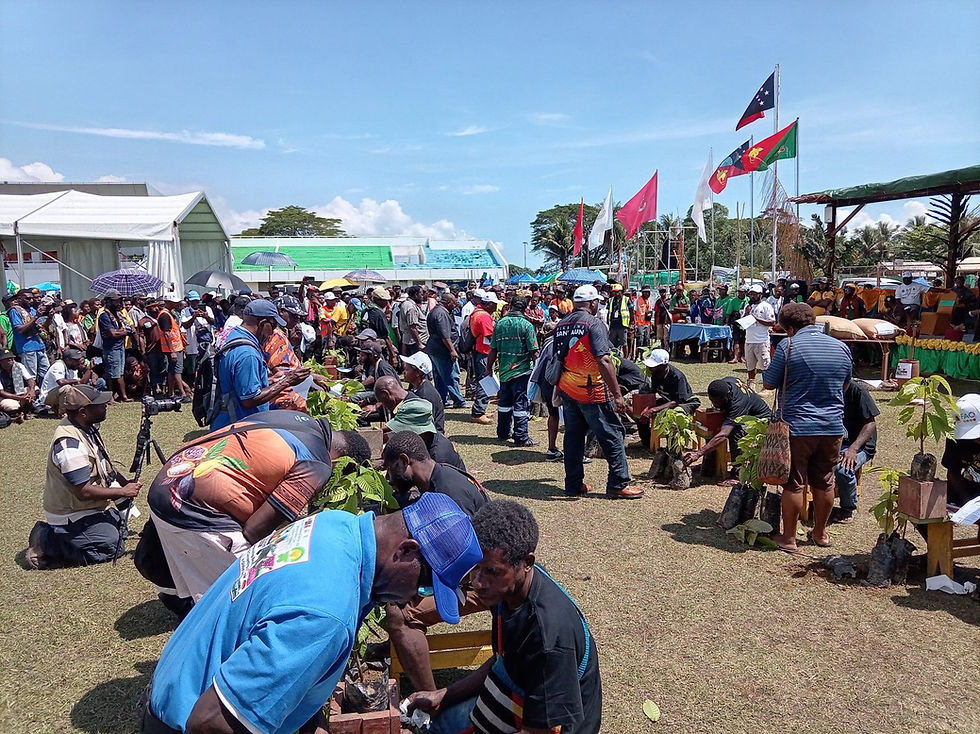
In a powerful shift toward local value addition, three international cocoa experts have begun equipping communities in East Sepik with practical skills to transform raw cocoa into everyday food products, just days before the highly anticipated Greater Sepik Cocoa of Excellence & Trade Expo.
Jeffrey Bootsma, Mark McAllister, and Oonagh Browne led a one-day hands-on training today in Hawain, Wewak District, where more than 30 participants mostly mothers, along with several men, gathered to learn how to produce cocoa tea, chocolate drinks, and banana cocoa sandwiches using organic, locally sourced ingredients.
The training comes at a critical moment, with the Greater Sepik Cocoa of Excellence & Trade Expo set to run from April 21 to 23, 2026. The initiative is designed to prepare local women for a mini “hot chocolate” competition during the Expo, an activity that not only celebrates creativity but promotes healthier, homegrown alternatives to imported products.
Speaking during the session, Browne, who also serves as the National Head Judge for the Cocoa of Excellence Judging Panel, emphasized the importance of reclaiming cocoa consumption at the community level. She noted that for decades, the Greater Sepik region has exported raw cocoa beans while importing processed chocolate products, many of which lack nutritional value.
“It is time for our people to taste their own cocoa,” she said, stressing that simple, natural recipes can empower families to improve both nutrition and income opportunities.
In a move to extend the impact beyond the training venue, Browne also released the recipes publicly, encouraging participants to share the knowledge within their respective communities. “This knowledge must not stay here,” she urged. “Take it back, teach others, and let it grow.”
The session was marked by strong collaboration between government and community stakeholders. The East Sepik Provincial Administration’s Division of Community Development, Provincial Tourism Unit, Division of Agriculture & Livestock, the PNG Cocoa Board, and local leaders all played active roles in ensuring the training’s success.


Comments